Short version: December is not a bigger birthday. Several people are buying for the same teenager against a shared deadline, the parcel is opened in company, and one buyer is committing the largest amount. Sort your list by those conditions first, then by band.
We write buying guides, not product reviews: we have not used every item on this page, and no teenager has graded it for us. Specifications come from the manufacturer or the listing, and prices, availability and ratings move constantly — whatever Amazon shows when you click is the authoritative figure.
This article contains affiliate links. If you buy through one, we earn a small commission at no extra cost to you. We only recommend what we would suggest to a friend.
The Federal Trade Commission (FTC) publishes its endorsement guides at 16 CFR Part 255. It calls them "administrative interpretations of laws enforced by the Federal Trade Commission for the guidance of the public." Our connection is stated above; the affiliate disclosure has the rest.
Most Christmas gifts for teens are picked off a year-round list with a wreath added. The occasion around them is doing several things the list never accounts for.
Why Christmas gifts for teens are a different buying problem
Every other date on this site involves one buyer, one recipient, and a deadline you set yourself. December has none of those properties.
What replaces them is logistical.
The buying is spread across several people working to one date, and none of them chose it. The parcel is likely to be opened with other people in the room. One buyer is committing the largest amount, and the rest benefit from knowing which one.
Picking from a stated interest is worked through in our main guide to gifts for teens. None of the above changes what makes a gift good. It changes which good gift is yours, and how early you need it. Which condition binds differs by buyer.
Who else is buying, and how to divide it up without a family meeting
What has already been ordered?
Not what the teenager wants. What is bought. That answer costs a message and kills the duplicate before it ships.
Duplication happens by category, and generally the obvious category. Whatever a search for this age group returns first is where a good deal of the buying lands. The categories nobody doubles up on need a particular fact about a particular person.
So divide the list by who holds which fact. What follows is our division of labor, not a rule anyone published.
| Who is buying | What that buyer should take | What to leave to somebody else |
|---|---|---|
| A parent | The large item, plus anything involving a size, an account or a household rule | Refills and consumables, which anyone can cover |
| A grandparent | Store credit alongside one wrapped item, or the better grade of a category everyone uses | Clothing sized from memory, or chosen for current taste |
| An aunt, uncle or family friend | The hobby purchase: materials, a refill, one better tool | The large item, which is not yours to preempt |
| A sibling | Something small, bought with their own money | Anything expensive enough to be compared with the rest |
| A gift exchange with a cap | The gift chosen for the cap, since the cap is the brief | Anything that needs explaining out loud |
| Someone who barely knows them | A category gift with the receipt in it | A guess at taste, dressed up as a surprise |
Where a cap and a drawn name are the brief, the cap does more of the choosing than the recipient does. The Secret Santa version of this problem runs on its own rules, and a cap has already settled who takes what.
The gift that carries the morning, by band
Decide early which item is the large one, then buy everything else to sit around it. A second large gift from somebody else is the most expensive form of the duplication problem.
13 to 15. Here the large gift attaches to a routine that already exists: a hobby with a fixed hour in the week, or the thing carried to school daily.
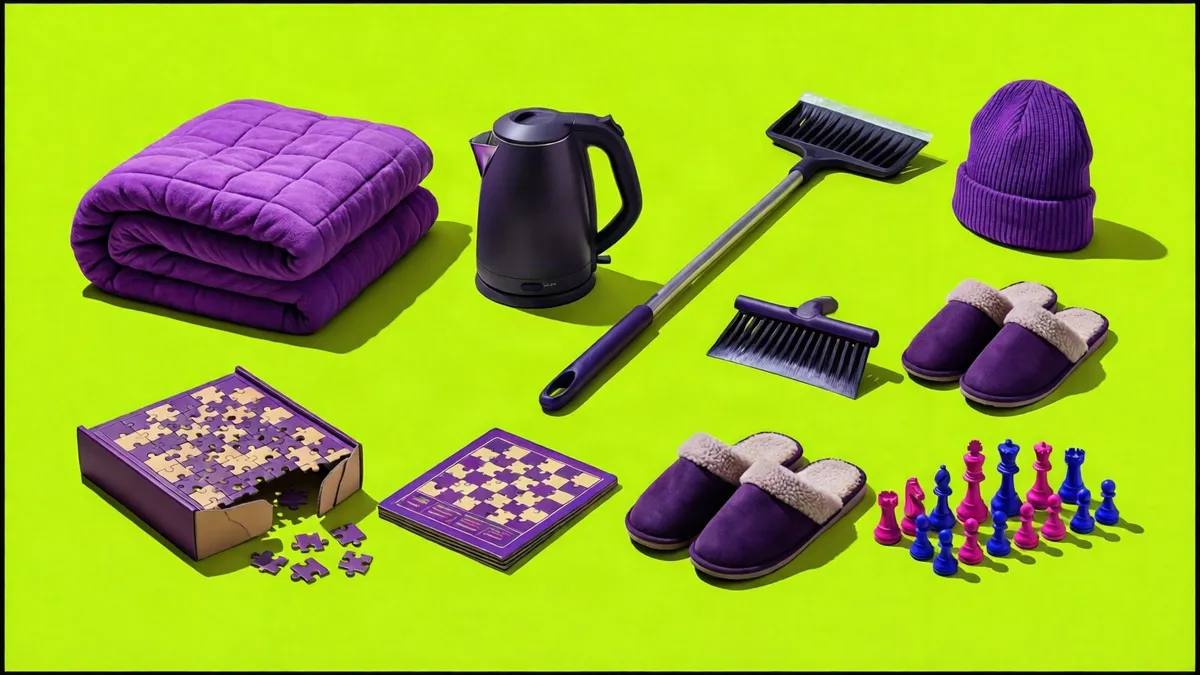
A room item is the December-specific version of that, since it never has to be carried home from wherever the holidays happened. On a weighted blanket the specification to read is the stated weight, printed on the listing alongside the wash instructions.
16 to 19. In this band the large gift points out of the house — a coat, luggage, a chair, gear for something they now do on their own schedule.
Where a parent has that covered, take the tier underneath and buy for the place they are moving into. An electric kettle is dull to wrap, and capacity in liters is the number to weigh against the counter it sits on.
December adds an item to the older band's list that no other month does. A first car meets its first cold morning somewhere around now.
A snow brush and ice scraper is the purchase that tends to happen late. Overall length is the specification worth reading, since it decides whether the middle of a windshield is reachable.
What fills around it — the small things that are not filler
A small gift is filler when it was chosen for its size. It stops being filler when it is chosen the way the large one was: something already in use, in a better grade, or something that runs out.
Categories with a generous fit carry the least risk in a pile of parcels. A knit beanie comes in one size. Sherpa-lined slippers are sold in small, medium and large, which is a wider target than a shoe size.
Anything worn ships with its receipt. A December purchase is exchanged after the holiday, weeks into its own window, so the date printed on it is the part to check.
Refills sit last on the list on purpose. They can be bought after you know what everybody else has taken, and they carry no size, no account and no lead time. What runs out inside a hobby is worked through in gifts for teen boys.
One shelf needs care in a room of onlookers: anything picked by a shade, a scent or a size you are guessing at. That risk is worked out in gifts for teen girls.
Opening it in a room full of people
A parcel opened with an audience puts conditions on the object that no other occasion imposes.
Explaining the gift is already a bad sign. Setting up an account on the spot, waiting out a firmware update, or hunting for a part that ships separately all fail here.
And nothing about the object should say anything about the recipient that the recipient did not volunteer. That last condition is the one a budget cannot help you with.
Something usable the same day it is unwrapped is the strongest thing in this slot. A 1000 piece jigsaw puzzle qualifies. So does a family board game, which spans whatever range of ages is sitting there.
A chess set is the durable form of the same idea.
Anything running on a login is the opposite of this slot.
This one needs an account, a subscription or an age minimum, which makes it a parent's decision before it is a gift decision. If you are not the parent, ask first — the product is fine, the surprise is the part that goes wrong.
The shipping and made-to-order clock, working backwards from December 25
Here is the part of December you cannot negotiate with, and you share it with everybody buying anything.
Order in this sequence:
- Made to order. Engraved, printed, framed, embroidered, built to a specification. A November decision.
- Sizes and shades. Buy while the exchange window still lands on the near side of the date.
- Dated things. Tickets and sessions sell by date, and the popular dates go first.
- Anything with a published cutoff. Carriers post their own December cutoffs each year. Read the one for the service you are actually paying for, not the fastest one on the page.
- Refills and consumables. These can wait, and they are the correct late purchase.
Made-to-order is worth expanding, because it fails without remedy. A production lead time sits in front of the shipping time. The two are added together. Paying for speed buys back the second number only. Read the stated lead time before you read the shipping options.
Our read of the category is that the middle grades thin out before the bottom shelf does, and that a restock is not worth planning around. No retail figure sits behind that. Ordering ahead for a dated occasion is argued in our Halloween guide.
What to buy when you will not see them until the holidays
A parcel arriving in early December has to sit somewhere until the day. That rules out anything perishable and anything needing a charge on arrival.
Shipping to an address that is not their home adds a second problem. A campus mailroom may close over the break, so check its dates, and check whether they will still be on site when it lands.
Store credit is December's answer to a late decision, because it can be bought on the last useful day and still land on time. Read what it is locked to before you buy it.
Apple's own terms state that its gift cards cannot be "exchanged; resold; or used to purchase Gift Cards." So where a second person sends credit for the same store, the pair cannot be merged into one useful thing.
Where Christmas gifts for teens go wrong in December
The duplicate. One category, more than one buyer, each of them landing on the obvious version of it.
The gift that needs setting up on the day. An account, an update, a missing cable, a battery sold separately. It cannot be used the day it arrives.
The made-to-order item ordered in December. Faster shipping does nothing to the part that happens before shipping.
The large gift bought by somebody who was not supposed to buy it. Everything bought to sit around the original was sized against a plan that no longer holds.
The item bought to be opened. Its packaging is the best-engineered part of it, and there is nothing it does once the wrapping is off.
Budget, as an approach
Where a cheap grade gives way, and what a planning band looks like, is argued on best gifts for teens.
December changes the shape of that question, because the total is rarely the binding constraint. How it gets distributed is. One item carries the morning, and the rest of the money buys things already due to be replaced.
Weighting toward that one item beats spreading evenly, in our view. An even spread produces a pile in which every object was chosen to cost about the same. That holds unless the buyers have already been assigned lanes, in which case your share is the only part you control.
FAQ
What is a good Christmas gift for a 13-year-old?
Buy for the room or for a hobby that already has a routine, and clear anything with a login first. A room item never has to be carried home afterward. Materials and refills are the small end of the same answer.
What do you buy a 16- to 19-year-old for Christmas?
Buy for the place they are heading toward: a coat, luggage, kitchen basics, gear for a first car. Ask whether a parent has already taken the large item, then buy the tier underneath. Credit is the one thing you can still buy after the carrier cutoffs have passed.
How do you stop everyone buying the same thing?
Ask the household what has already been ordered, and say what you plan to take. Divide by who holds which fact about the recipient, using the table above. The obvious category is the one that arrives twice.
When should you order Christmas gifts for a teenager?
Made-to-order items in November, sizes and shades while an exchange window still fits before the date, dated tickets as soon as the dates release. Consumables can wait until December. Carriers publish their own cutoffs each year.
What should the large Christmas gift be?
Whichever item nobody else has claimed and nobody else is placed to match. Settle it before the smaller purchases, since those are chosen to sit around it. For 13 to 15 that is usually the room or a standing hobby; for 16 to 19, the thing that leaves with them.
Written in August, for a December. Every cutoff date above belongs to the year you are buying in, so read the carrier's own page before you rely on it. — Devon Marsh
Sources
- U.S. Government Publishing Office / Federal Trade Commission, "16 CFR Part 255 — Guides Concerning Use of Endorsements and Testimonials in Advertising," CFR Title 16, Vol. 1, 2024 edition; source note 88 FR 48102, July 26, 2023 — govinfo.gov (retrieved August 20, 2026)
- Apple Inc., "Apple Gift Cards and Content Codes Terms and Conditions," last updated October 14, 2024 — apple.com (retrieved August 20, 2026)